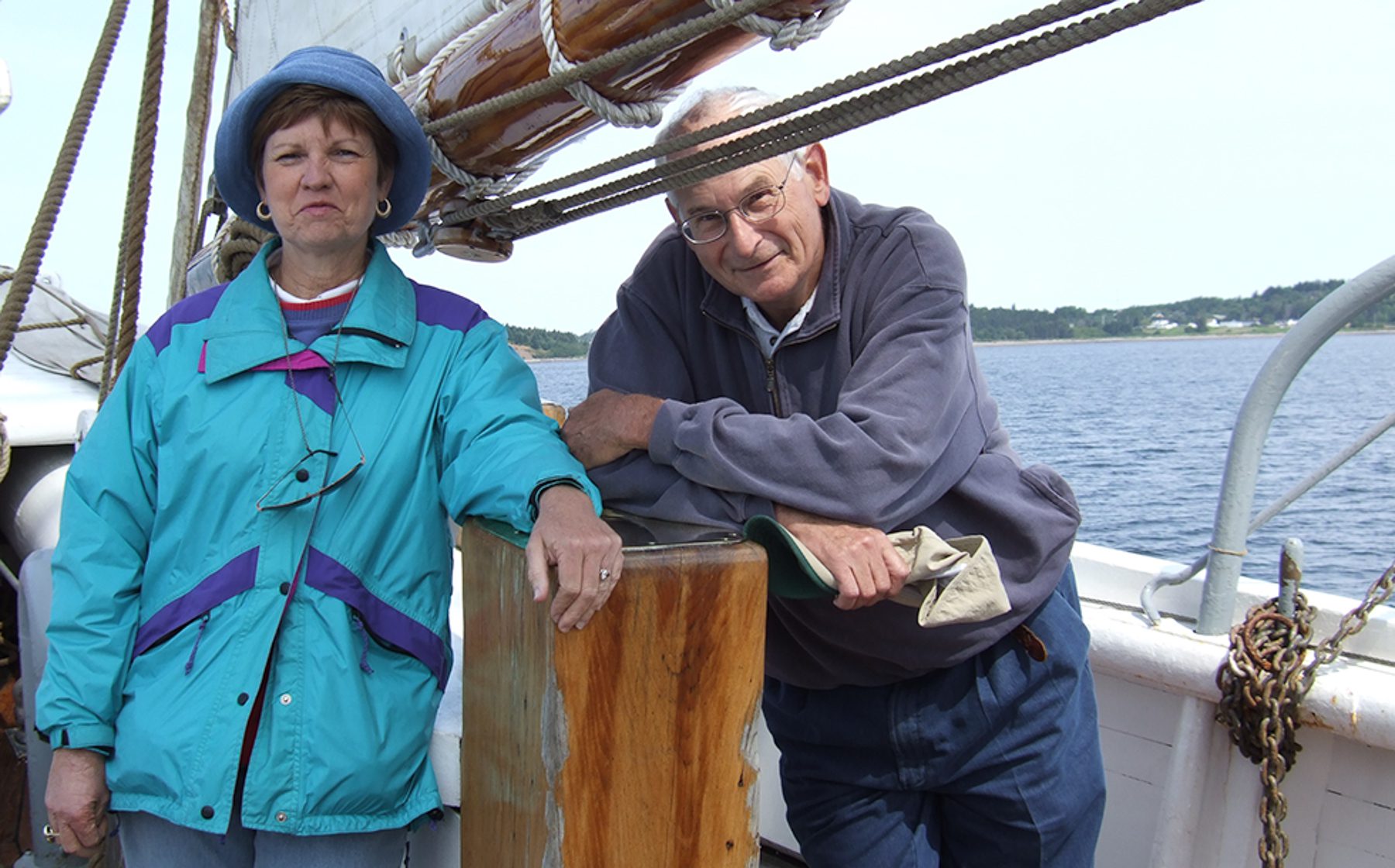
Tuesday, 6 August 2013
Fogo Island and Tilting
Leaving Change Islands, we took the ferry to Fogo Island. A bit of history about Newfoundland’s outport Islands like Change Islands and Fogo Island. In 1960, Canadian Premier Smallwood was faced with improving/stabilizing the economy of Newfoundland. Part of his review process was determining what to do with the many small villages located just off the main coast of NL (known as “outports”). Most of these villages were not self-sufficient, requiring significant government resources to remain viable (such as ferry service, local infrastructure, etc.) to support a relatively small (and often declining) population. The economics of scale were just not present, so the government embarked on a campaign of “resettling” some of the outports. At this point we have visited 3 outports: South East Bight (25 families), Change Islands (200 people) and the villages of Fogo Island. Over the years some outports have been “resettled”. These resettled village/islands are now abandoned. Others, like Fogo Island have survived. To combat the prospect of resettlement, the people of Fogo Island, in 1966, came together and created what is now known as the Fogo Process: a way for a community to come together to save itself. This process is still used as a model around the world whereby communities redevelop themselves into a sustainable entity. The success of the Fogo Process has enabled other outports to also survive, while others have not.
We had anticipated this visit because it was one of the highlights of our last visit to NL. On the island of Fogo is the town of Tilting. During our last visit, Tilting was perhaps the quaintest village we visited so we were anxious to renew its acquaintance. It was on our last visit to Tilting we learned about house moving as well as discovering many of its residences still spoke Irish Gaelic. Seems the Irish settled Tilting in 1730.
Perhaps not completely unique to Tilting but certainly very interesting was their habit of House Launching. The older houses and outbuildings in Tilting were designed and built for mobility. They were often moved or “launched,” either when they were sold or when they were relocated to a more convenient site. Moving methods involved either placing the house in a sled and pulling it by manpower or floating it across open water (pulled by a small boat). Some houses were moved two or three times, and a few were moved to other communities.
Unfortunately, we were quite disappointed with this visit to Tilting. As some of you know, Meriam and I were very concerned about the economy of NL during our last visit and we were afraid villages like Tilting would disappear. Also, as you will recall from one of our other posts on this trip, NL is now experiencing an economic boom, resulting from their mining and oil business. It seems this boom has caused a significant change to many parts of NL, including Tilting. While some of the old buildings, stages (small buildings at the end of a wharf), and wharfs still exist, they are now overshadowed by new construction. Even though the entire village of Tilting is a Canadian national historic trust site, the absence of zoning has allowed its uniqueness to disappear. So basically (for us) Tilting is gone, not from neglect or poverty, but from too much prosperity. This goes to show how towns (or villages) can lose their uniqueness in just 7 years (the same thing of course could happen to Jefferson!)
As always (at least of us), the most enjoyable aspect of our visit here were the people. They are warm, friendly and outgoing. Thanks to the (somewhat) revival of the fishing industry, we were able to enjoy scallops and cod in abundance (perhaps too much for our waistline!)
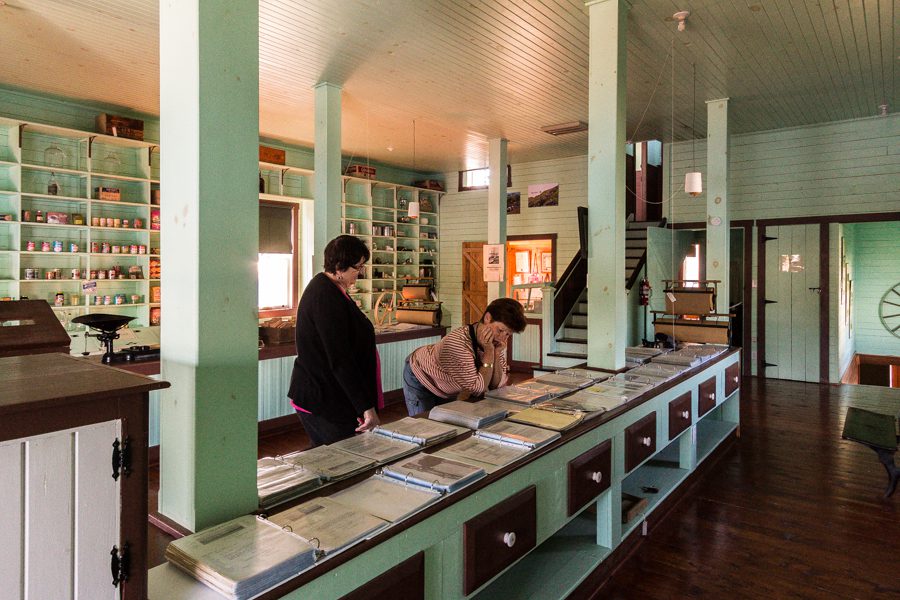
We have now “changed” islands to Fogo Island. We are in another museum, dedicated to the Fisherman’s Union. Meriam is studying old documents inside the Fishermans Union Exchange. It was here that the “Fogo Process” was developed in 1966 — a way for a community to come together to save itself. This process is now used as a model around the world whereby communities redevelop themselves into a sustainable entity.

Sashes worn by the Fisherman Union men and women as part of their meetings, much like the Masons.

Until the Cod Moritorium, Fogo Island used to produce large quanities of Cod Liver Oil. These are some of the holding tanks. I don’t know about any of you, but my mother used to make me take Cod Liver Oil — ugh!
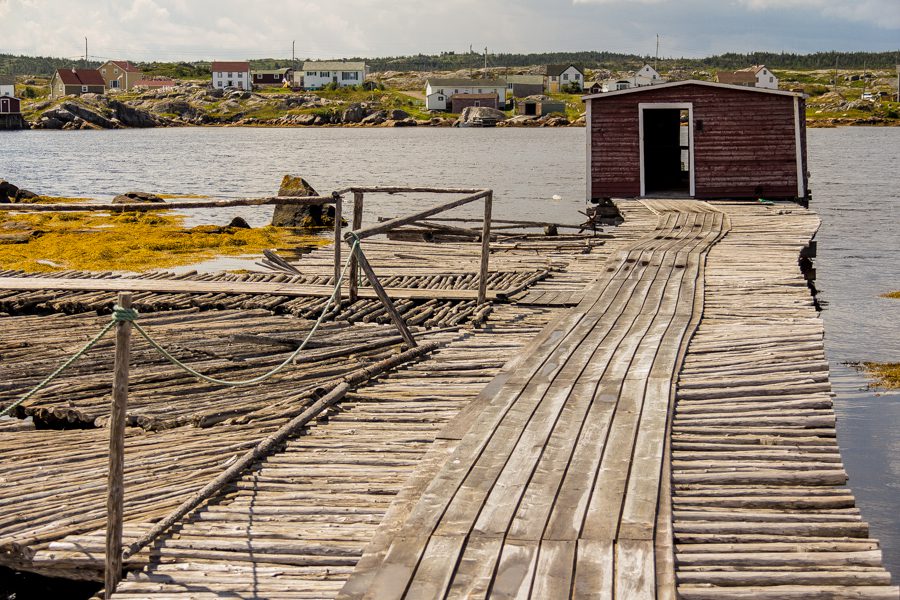
Another stage with the “flake” in front. Filleted, salted cod would be spread out on the flake for drying.
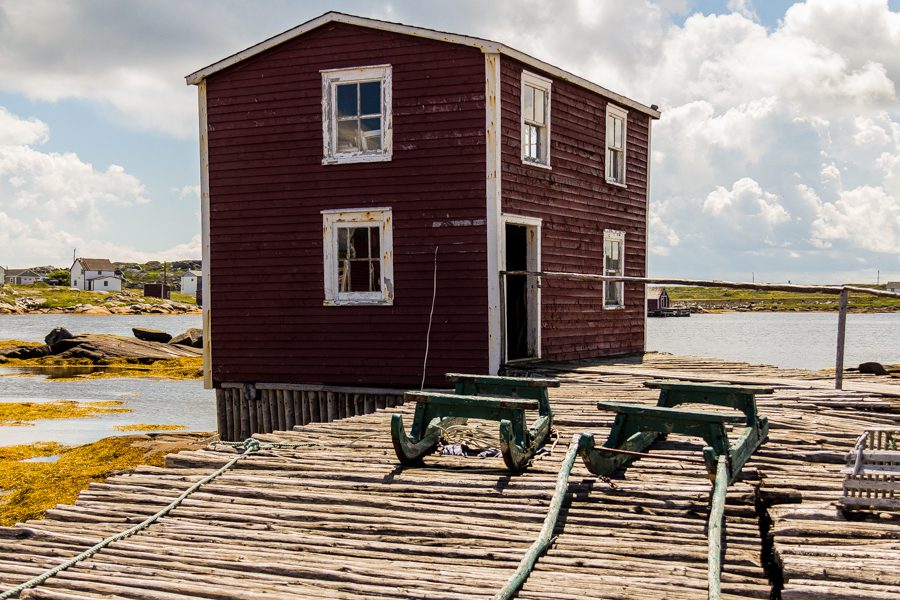
These little structures are called Stages. They would clean and fillet their cod here.The green items in the foreground are sleighs used during the winter for transporting wood, etc.


All the old homes (and some of the new) have these roof ladders for easy access to the chimney. Burning so much wood during the winter often causes fires to ignite in the chimney

Built in 1890, this house is the oldest in Tilting still being used as a residence.

All the homes in Tilting used to have these fences. They designated property lines as well as fencing off their gardens and keeping their sheep contained.

Note how this stage is built on solid rock. Almost all stages have a similar construction, many leaning to one side or the other.

Returning to the ferry on Fogo, we encounted this young caribou munching grass along the road side.
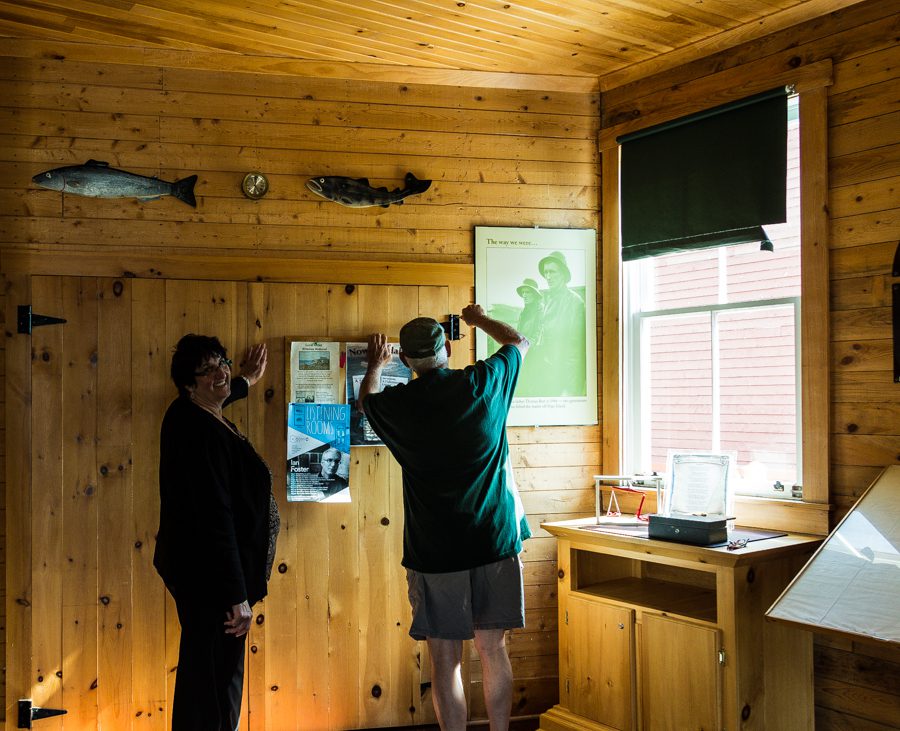
Seems no matter were we go, it seems we are able to help someone with a problem. The ladies at the Fisherman’s Union locked their keys inside this room so I help them unscrew the hinges and removed the door!

The ferry taking us from Fogo Island back to the mainland.

It’s hard to describe how laid back the Newfoundlanders are. Here, the ferry is being loaded and unloaded and this truck pulls in the wrong lane, stops, everyone hops out and begins to chat. No one, including the ferry operators minded. They just waited until they were finished!