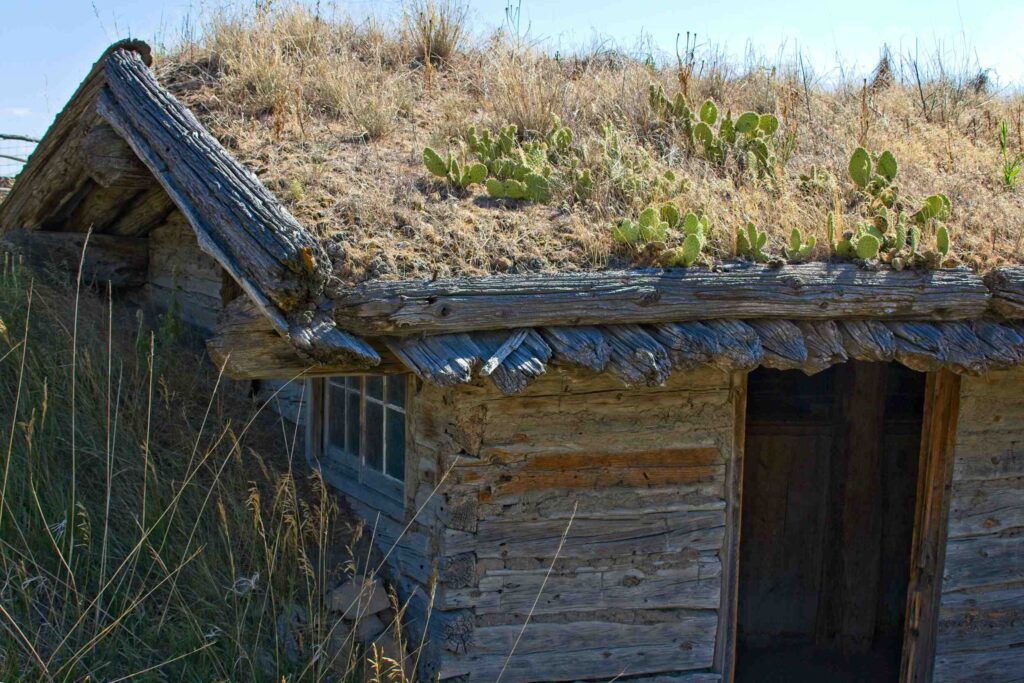
We had a hard day’s drive yesterday, covering almost 500 miles. However, this brought us near to our next sojourn, The Museum of the Fur Trade. Turns out, this was another of Meriam’s “finds”, located in Chadrin, NE. Upon arriving at the museum, we discovered it is listed as a National Historic site – one of the original trading posts is located here.
The other reason we drove 500 miles is because there are not a lot of National Forests in the Plains. Why are National Forests important to us and why do we “hop-scotch” from one to another when we can? For those of you who are new to the blog, you should know we try to “boondock” as much as possible when we travel. Boondocking means we find places of seclusion with (hopefully) natural beauty. We are able to camp in these places because we are “totally self contained” – our own electricity, potty, water, bed, and food.
We are committed to utilizing public lands which includes National Parks, National Forests, BLM areas (to us this means Bureau of Land Management), and state parks – choosing to spend our dollars supporting them. A huge benefit to this approach is the natural beauty they provide.
So back to the Museum of the Fur Trade. This place is a “jewel in the rough”. The museum is privately supported, containing perhaps the best collection of goods from the fur trade era in North America.
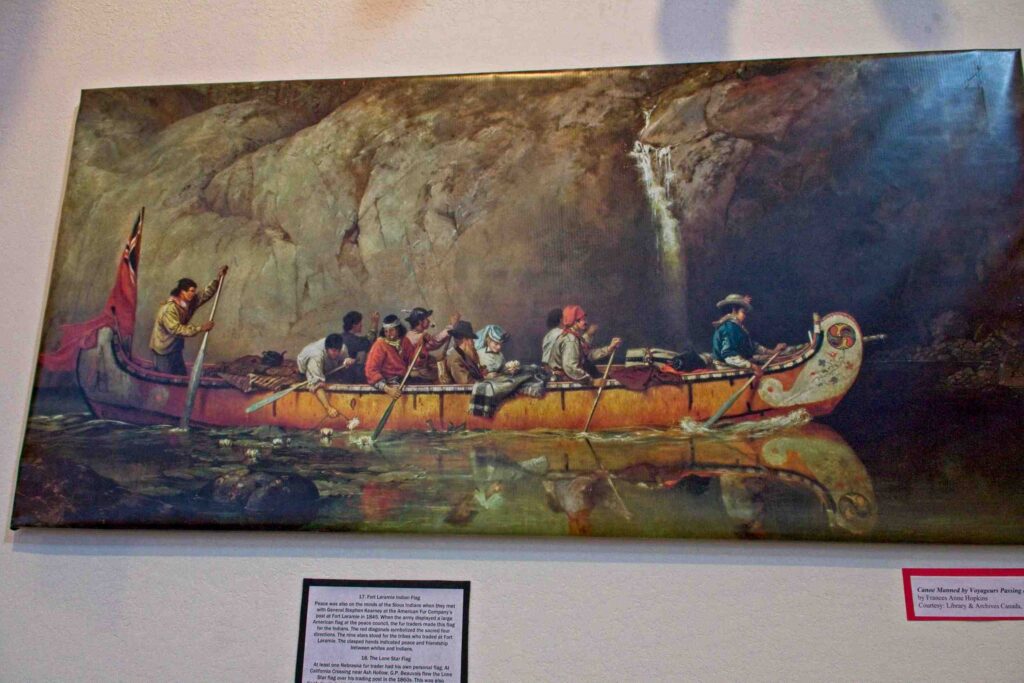
The history of fur trade in North America probably begins with prehistoric peoples coming across the Bering Strait. However, the earliest documented history is of Russian fur trades in Alaska and the Aleutian Islands in the late 1400s and early 1500s. Also, Europeans (primarily the English, French and Dutch) began fur trading in North America in the early 1500s. Lest we forget, the indigenous Indians also participated as partners in this trade. The driving factor for this trade was, of course, animal furs. While demand for fur hats was one the driving forces for these furs, an earlier demand came from the need for warmth associated with clothing such as robes, capes and blankets. One only has to remember that Europeans at the time lived in very cold, poorly warmed houses.
The demand for fur, and its associated trapping areas, led to the inevitable conflict between the various nations hoping to monopolize the trade. These conflicts ultimately culminated in a war between the English and French, known as the French and Indian War (1754 – 1763). With the English victory, the French were driven out of North American leaving the fur trade to the English and their American Colonies.
In their quest to control the fur trade, the French, English and Dutch utilized private companies to help dominate their spheres of influence. Such companies as the English Hudson’s Bay Company and the French Compagnie d’Occident were fierce competitors, aligning with various Indian tribes. Also involved were the Northwest Company, and the American Fur Company.






maoMeriam blends into the display
HaroldYes, I had already driven off when I noticed Meriam was not in the truck. I went back to the museum and could not find her. I only noticed her when she moved slightly as she stood in front of the display.
LisaLove all these photos/details! Fascinating history.
HaroldThanks, Lisa. We really should have visited this museum in hour increments. As usual, when we visit a museum, we get overload. We are already wishing we had spent more time at some of the exhibits.
Charles KempMargie & I are once again really-really enjoying travelling along with you. There is so much out there that we never seen!!! As a matter of interest, the bridge club restarted playing again 2 weeks ago, hope yawl can rejoin us in Sept—in the meantime stay safe and healthy Charlie
HaroldCharlie, As always, thanks for traveling with us. We try to keep up with the ongoings of the club. As a matter of fact, I noticed that last week you and Margie scored an incredible 71! That is awesome! Meriam and I can only dream of such a score. You guys be safe and healthy.
Samuel AyerIt’s hard to tell where the Indian display starts and Meriam leaves off.
HaroldI thought about renting Meriam to the museum for the display…giving it some animation.
Weldon NashWHAT a gun collection!
HaroldWeldon, as I mentioned, MB would let me post only a small portion of the collection. I bet there were at least 500, if not more, weapons in the museum.
KayVery interesting. I found a small animal trap at the lake!
HaroldThe big trap at the museum intrigued me. I suspect it was for bear!