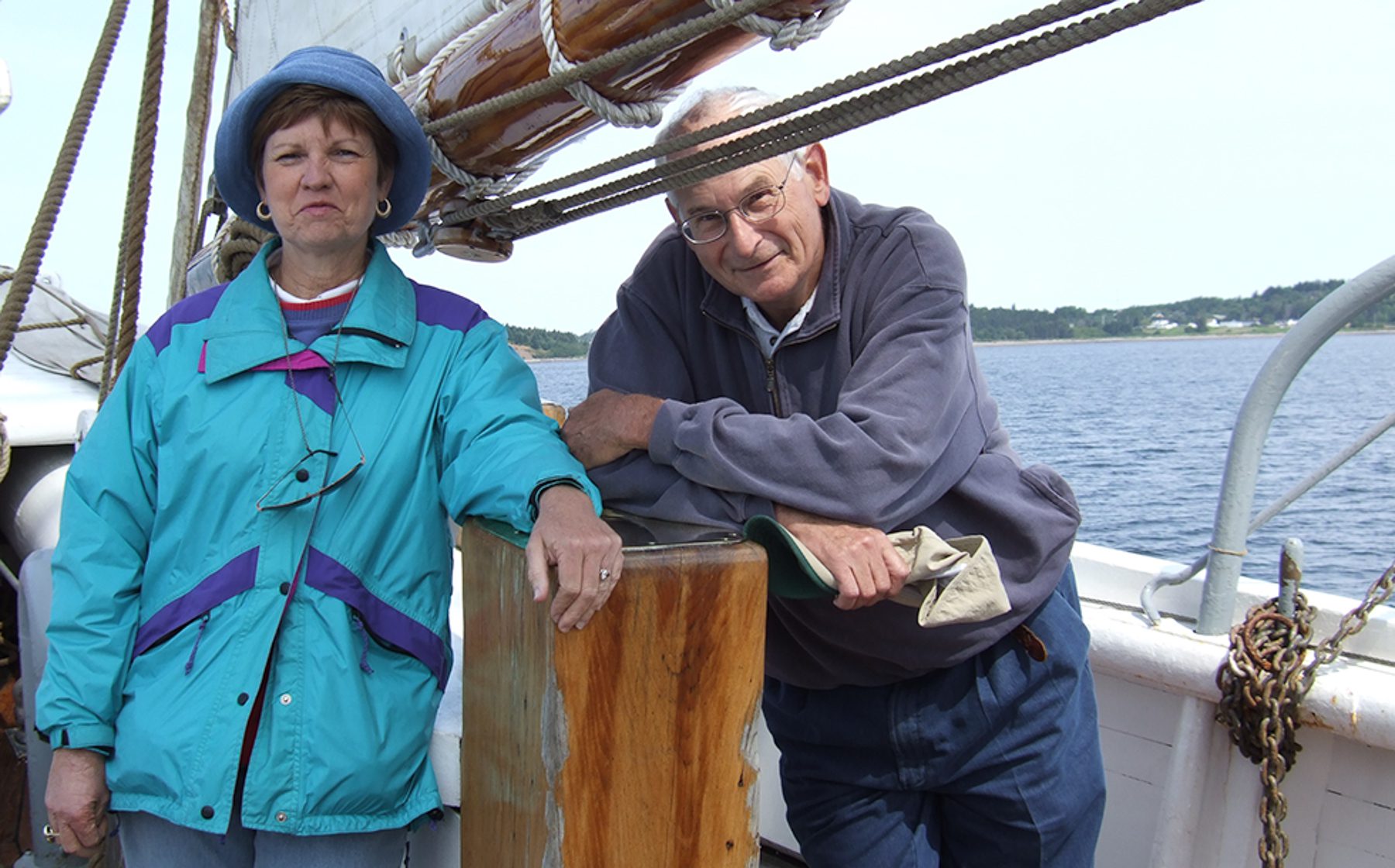
(July 25, 2018) We visited the North Pacific Cannery seven years ago on our first trip to Alaska. It was so memorable we decided to visit again. The North Pacific Cannery is one of Canada’s National Historic Sites.
From the last half of the 19th century and during most of the 20th century, hundreds of commercial salmon canneries dotted the West Coast of North America, from California’s Sacramento River to Alaska’s Bristol Bay. Each summer tens of thousands of people from diverse ethnic backgrounds would congregate in these canneries for four months as salmon began heading up rivers to spawn. Many of these canneries, especially in British Columbia, were located in remote locations, which made for a very unique work and living experience.
The North Pacific is unique among the few surviving cannery sites. It was established in 1889 and is the oldest remaining salmon cannery on the West Coast of North America and ran continuously for almost 100 years. Because of its relatively recent operations (the mid-1980s), this cannery has survived today virtually intact. Thanks to the Canadian Park Service, it will remain so for the future.
Strolling through the cannery, one can see the history of salmon canning as it unfolded – from its early days of hand cleaning and packing to its transition to “modern” automated systems. All the cleaning, processing, canning and labeling machines are still there for the viewing. Rows and rows of can still sit silently, waiting for their salmon.


 North Pacific sits on the Skeena River, part of the Inverness Passage.


This scene (because of the “Japanese Gate” in front) reminded Meriam and me of the thousands of Japanese that worked at the cannery during its 100-year operation.

Just a small portion of the “modern” cannery machinery.
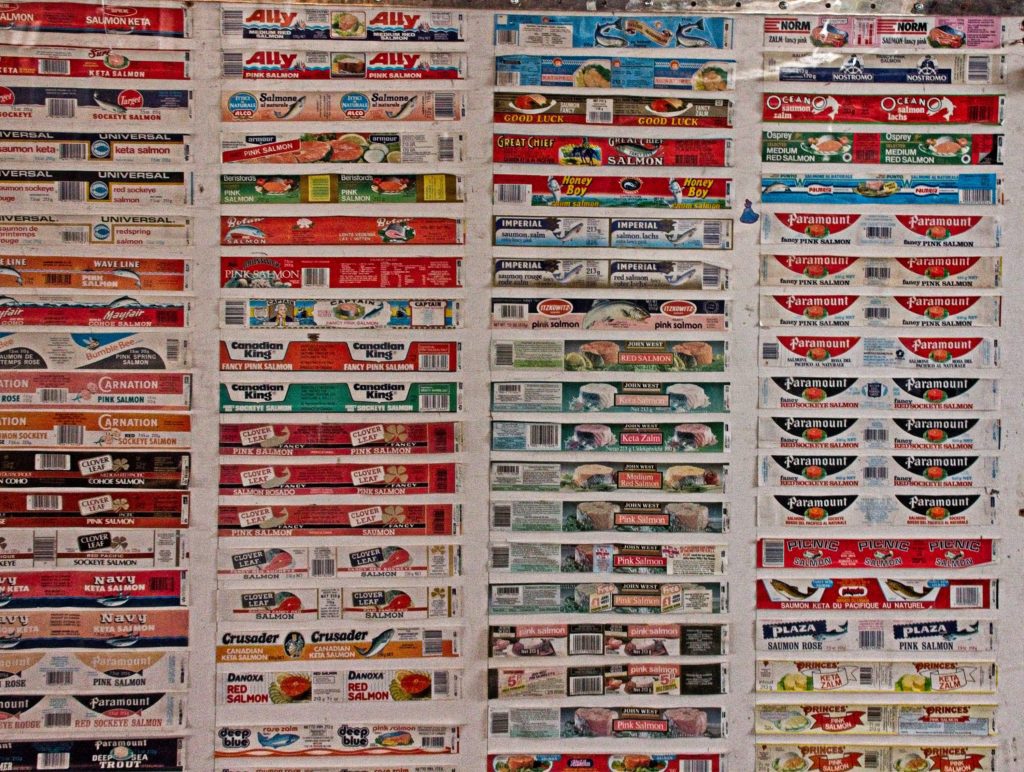
A small portion of the hundreds of different salmon labels applied to cans shipped from North Pacific. Can you see one you remember?
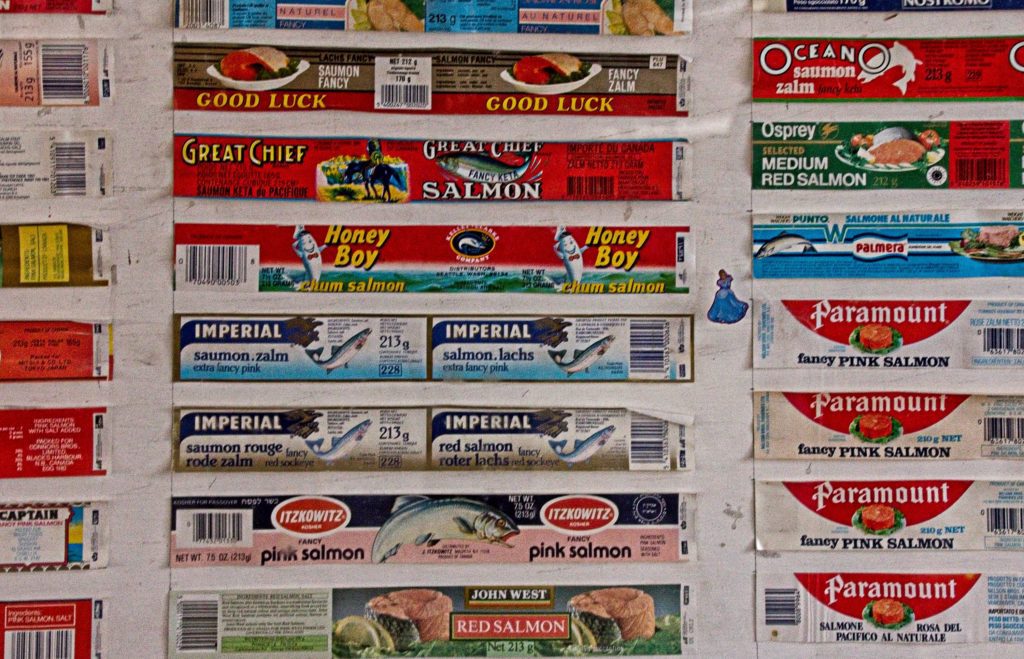
Check out the Honey Boy label. Meriam remembers her mother using salmon for cans with this label to make her salmon cakes. For me, it was Imperial.
maoA very picturesque place! You can almost see all the Japanese working fast to keep up with the salmon. I remember how fast the salmon were swimming up the lock in Valdez!
Meriam BlairYes it is so interesting. I am like u I can close my eyes and see all the salmon in Valdez.
HaroldMAO, did you pick out your label?
C KempWe are still really enjoying your trip. I just wanted to update you on Jan Jenkins, he and Sandy played in the Tyler bridge tournament and he looked good. He had successful colon surgery in Houston, but has to have chemo for a few weeks in Longview. Thanks Charlie
HaroldCharlie, GREAT news about Jan! Also pleased to see he was well enough to play in Tyler. BTW, how did you guys do?
Julianne S FischerMy mother used Honey Boy salmon for her salmon croquets.
SwannOh how interesting!! I remember the Honey Boy!
HaroldSwann, I guess we didn’t have honey bee in New Mexico during the time I grew up…either that or I am just too old 😉 for the honey bee brand!
SwannSo interesting!! I remember Honey Boy!
Laura OmerReminds me very much of a wonderful cannery Kay, Larry and I toured while in Norway–I believe Stavanger. It was somehow an “earthy” experience for me.
HaroldLaura, too interesting. Do you remember the type of fish they canned?