Wednesday 5, – Saturday 8, August 2015
Northern Big Horn Mountains from East to West
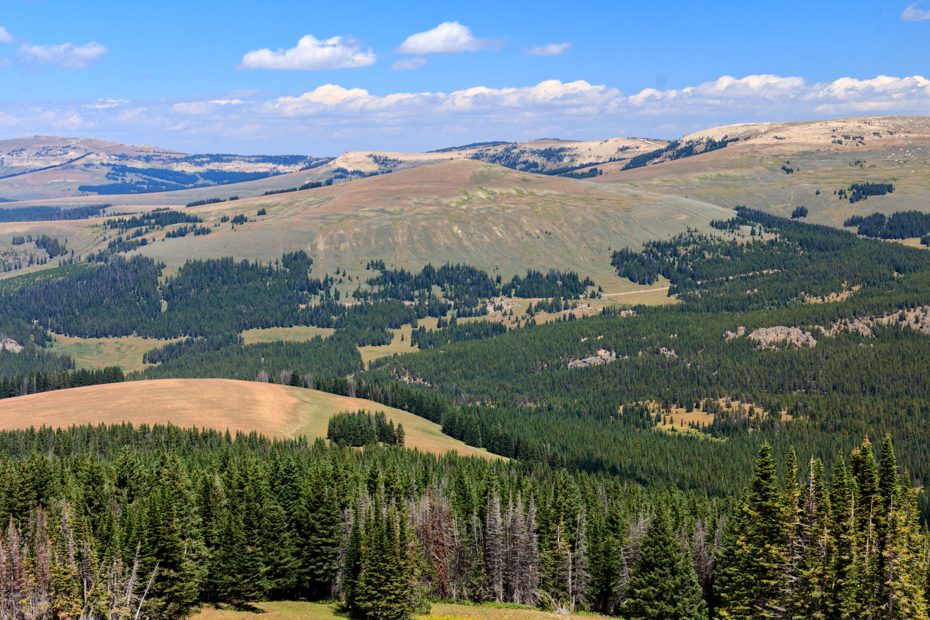
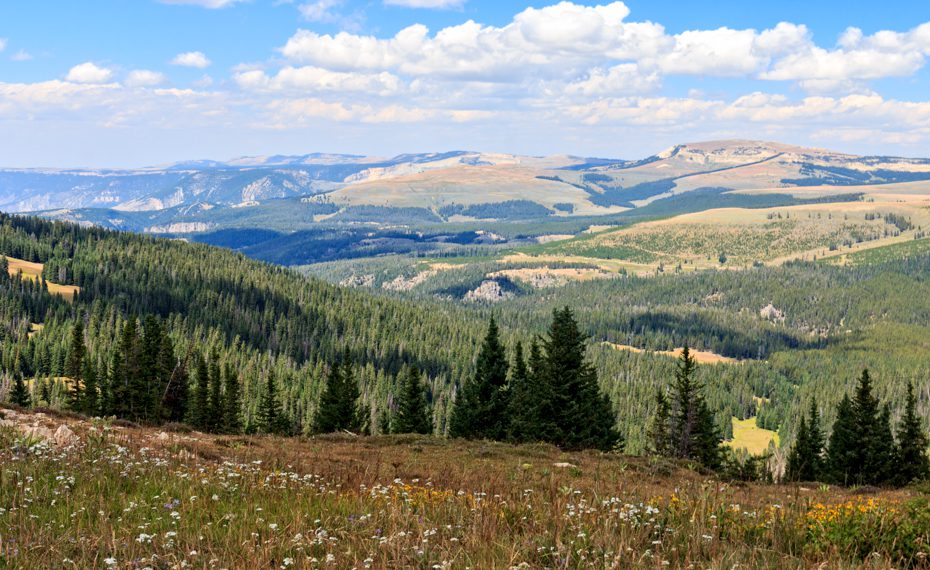
We left Ft. Smith and the Big Horn River, traveling west on Hwy 14a into the Northern end of the Big Horn Mountains. During this section of our “Big Trip”, we had four goals in mind. Firstly we want to escape the hot environment of Ft. Smith for the cooler environs of low 40s at night to low 70s in the day (read non-Texas temps) of the Big Horn Mountains and the joy the outdoors brings to us. Secondly, we are hanging out killing time until we can enter Yellowstone without the hordes of tourists so prevalent in the summer months (notice we don’t think of ourselves as tourists). Thirdly, on two of our previous traveling from Texas to northwestern areas, we used the seventy mile stretch of Hwy 14a just as a means to the cross mountain range. On these sections, as driver, I was keeping my nose to the highway while continuously monitoring the truck’s transmission temperature. Large elevation changes (in excess of 5,000 feet) usually create steep climbs and descents often accompanied by hair pen curves. These conditions can destroy a transmission when its temperature rises too much. All the while, Meriam (as passenger and navigator) is enjoying the beautiful scenery! So, on this trip we decided to slow down such that both of us can enjoy this beautiful section of the US. Lastly, this area gave us the opportunity for hiking and fishing wonderful mountain streams.
The photographs associated with this posting will give you some of the highlights of this week.
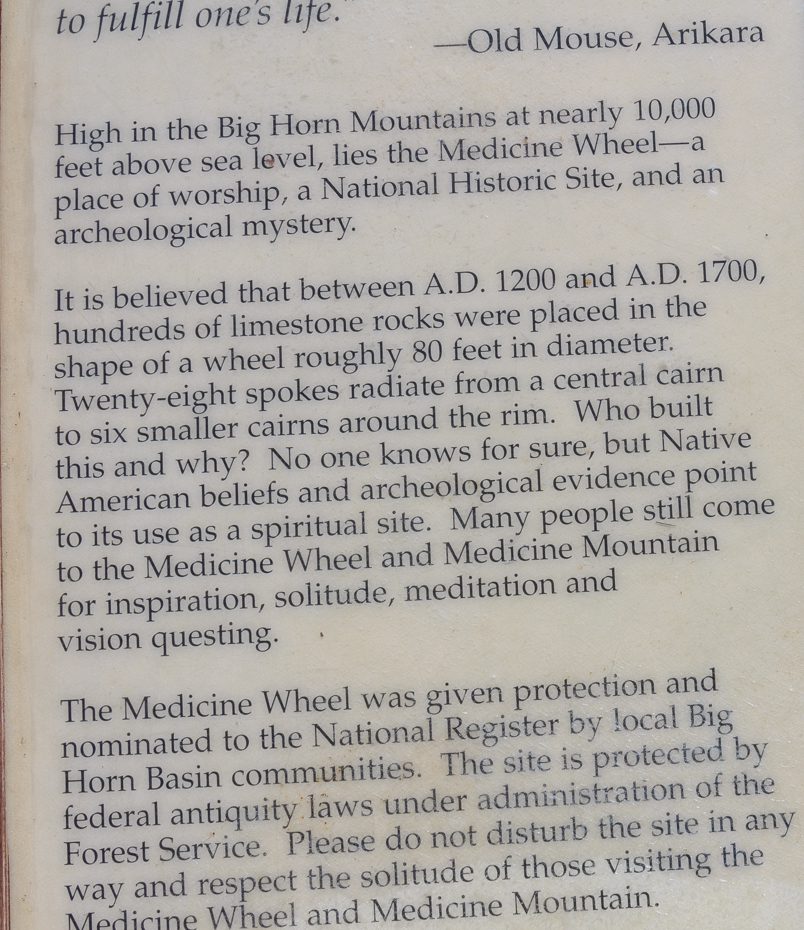
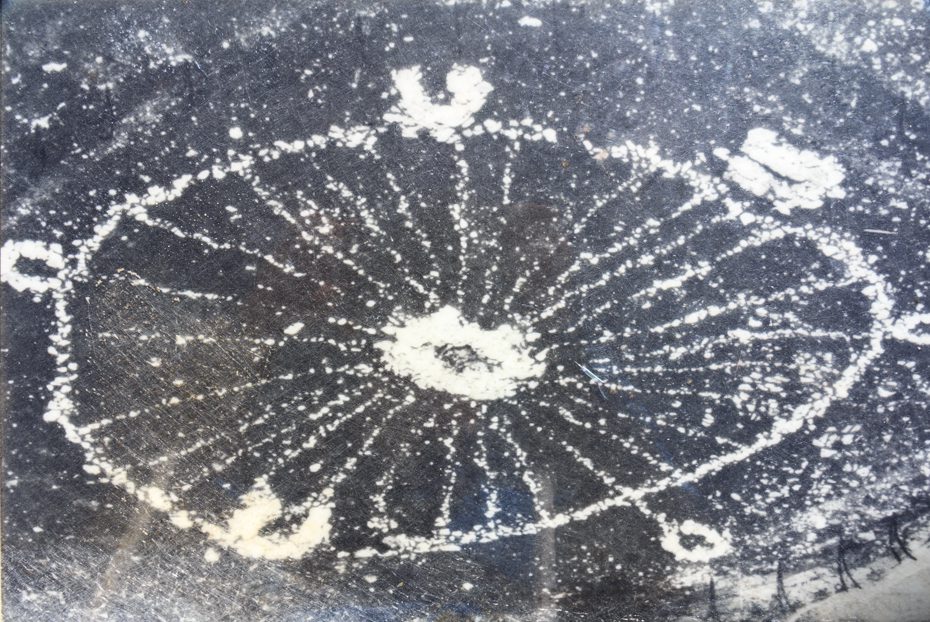
- Continuing our history lesson of Wyoming, we followed the Bozeman and Bridger trails meandering through the Big Horn. In addition to the history associated with the early westward pioneers, we discovered the National Historic Trust site, Medicine Wheel. We have included a photograph which provides an explanation of this important site. Medicine Wheel is still being used by over 90 Indian tribes as one of their sacred sites.
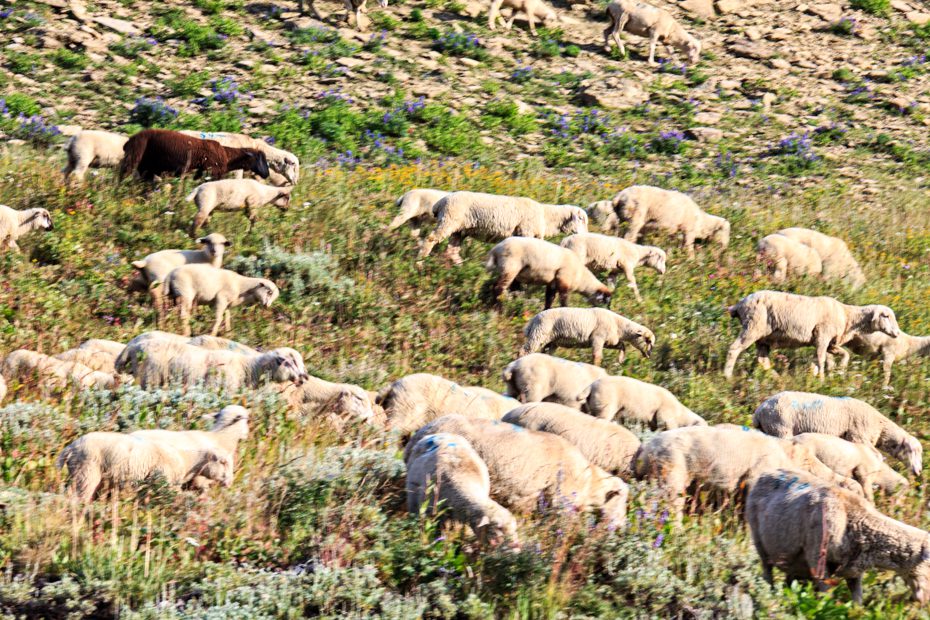
- We have enjoyed seeing many wild animals including bear, moose, turkey, owls, deer, eagles, marmots, squirrels, pica, field mice, birds, butterflies, moths, mosquitos, flies, etc. One of the underlying cultures of this area is its extensive use for ranching, both cattle and sheep. As we previously mentioned how Montana and Wyoming actively preserve their quality of fishing, the forest service issues grazing permits per head for cattle and sheep. This helps keep the land from becoming over grazed. The photographs you see of the sheep are of the only herd we have seen in the whole area. However, what a herd it was. We estimate there were more than 300 in this herd. No telling how many were just over the hill. This also reminded us of a gentleman we met in the Mint Saloon in Sheridan. He told us how, as a young boy, he lived alone in a wagon in the hills of the Big Horn all summer shepherding sheep where he lived off the land.
- While the photographs of the North Tongue Creek make it appear to be just a small, insignificant stream, it is the home of native cutthroat, rainbow, browns and brook trout. Fishing was great fun. (P.S. While Meriam nailed me on the Big Horn, great skill on my part resulted in my greatly surpassing the number of fish she netted!)
- Editor’s Wife’s Note: While Harold “luckily” got into a feeding frenzy of an insect hatch, I was in the camper cooking lunch. (Whine, whine, whine…) Perhaps somewhere in between lies the truth…
Harold and Meriam

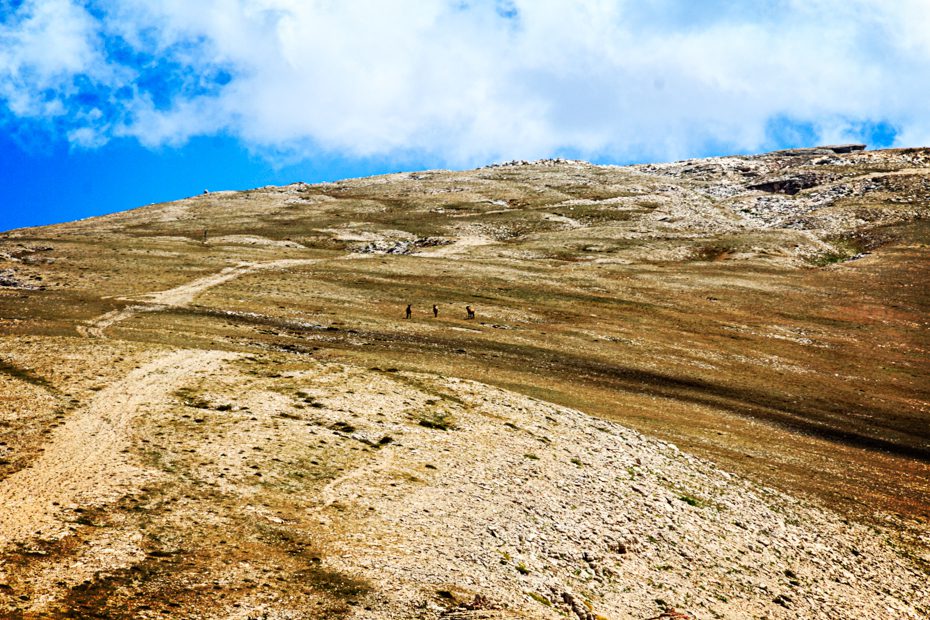
Notice the three animals in the background. Any guesses what they are?
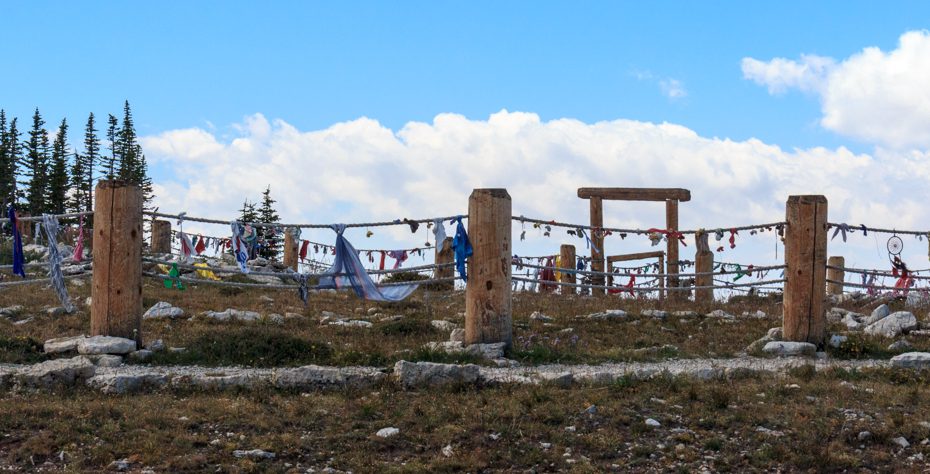

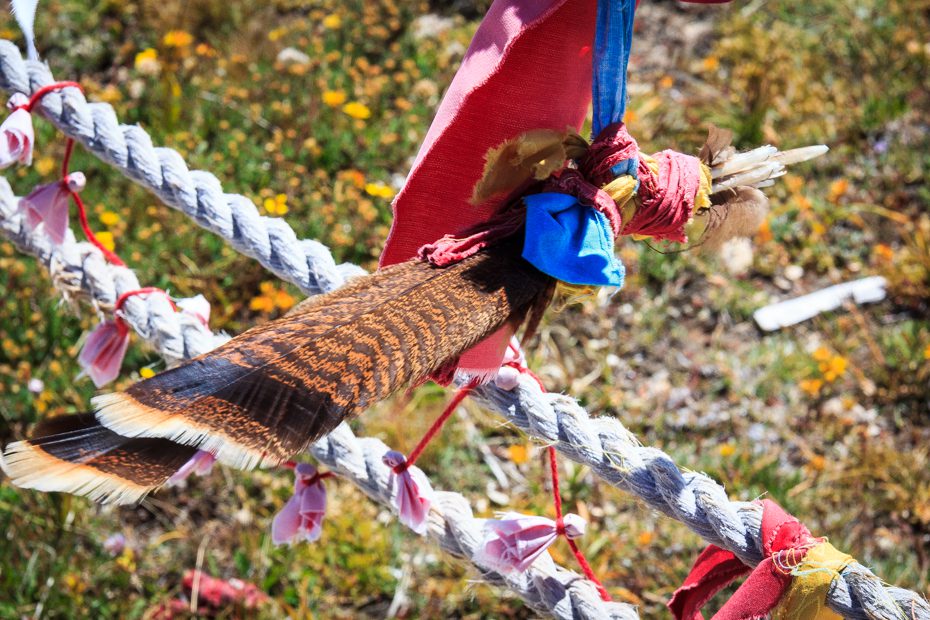
Packets like this feather, cloth, small purses, etc. are tied here by the Indians as some form of token religious offering.

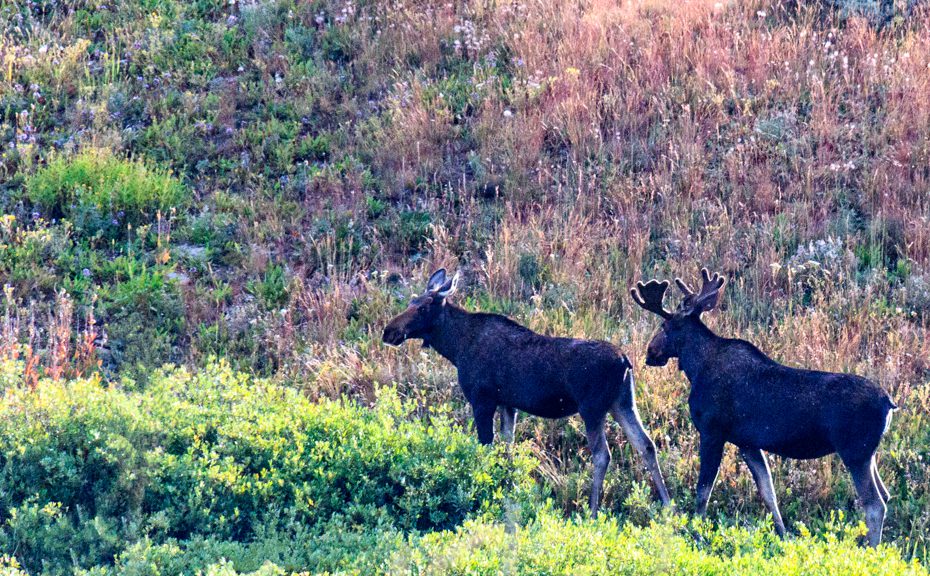

We saw more moose in the Big Horn Mountains than on our two previous trips to Alaska.

This is the North Tongue Creek where HB retrieved his fishing honor!