Saturday, 25 July 2015
Re-Enactment of the Battle of North Platte Station
As we mentioned in a previous posting, North Platte Bridge Station (later renamed to Fort Caspar) was of vital importance to the pioneers who traveled the various wagon trails during the great migration in the mid to late 1800s. It was at this location almost all the pioneers crossed the North Platte River. Situated at this crossing was Fort Caspar. Of the approximate 500,000 pioneers, 80,000 were headed for the Willamette Valley in Oregon, some 40,000 Mormon had the Great Salt Lake Region as their destination, and most of the remaining 350,000 were bound for California. Of those who started their pioneer journey, one in ten did not complete it.
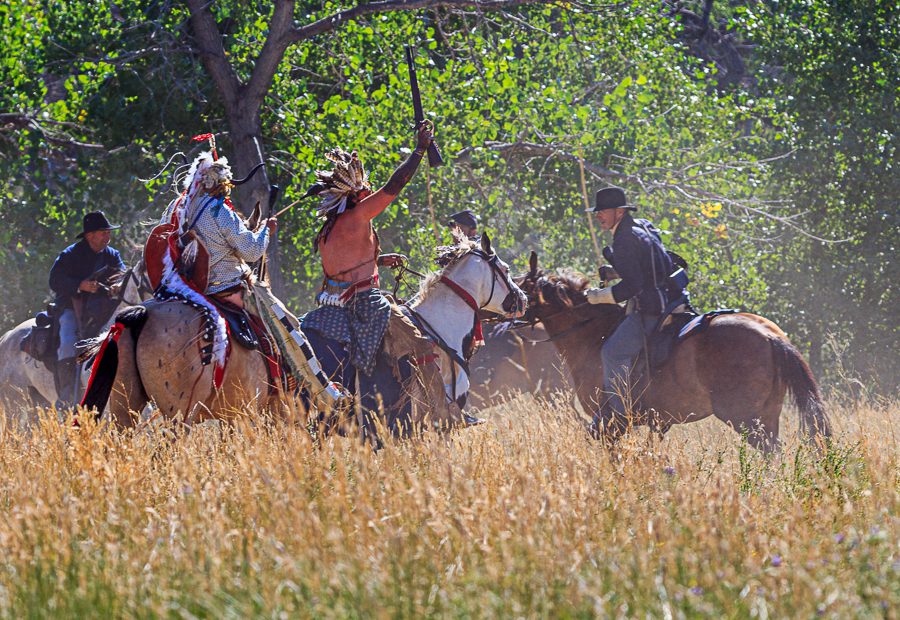
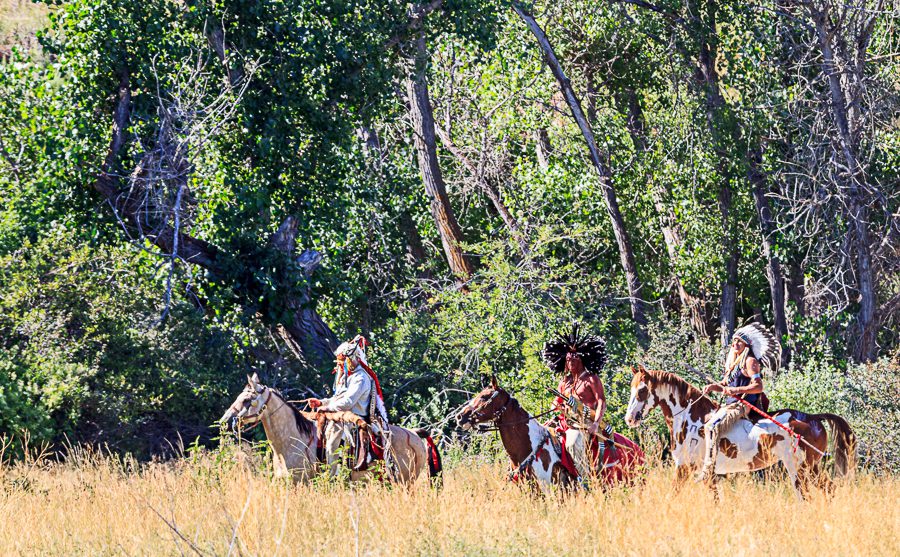
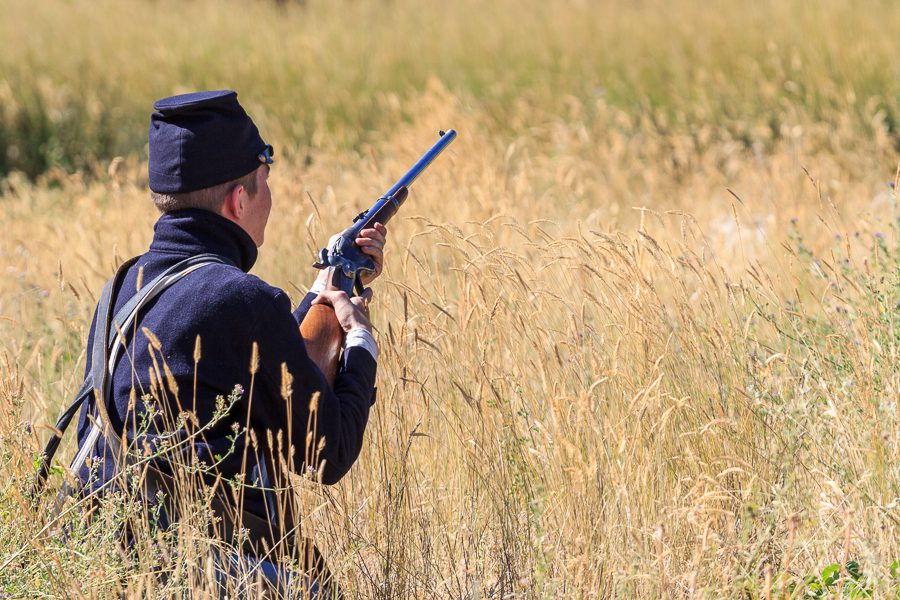
The costumes of the soldiers and Indians alike are authentic as is the approximate location along the North Platte River where the re-enactment was held. However, one significant visual element of these photographs is not true to history! In the photographs you will see a lot of grass and shrubbery. As the re-enactment unfolded, the narrator of the event described how there would be virtually no grasses around the battle scene. This was because all had been trampled down by the thousands of wagons that had traversed the area as the pioneer migration unfolded.
The Battle of North Platte Station resulted in the massacre of Lt. Caspar Collins and 22 of his men from the 11th Kansas. This battle was precipitated by the infamous Sand Creek Massacre in Colorado by US Calvary troops.
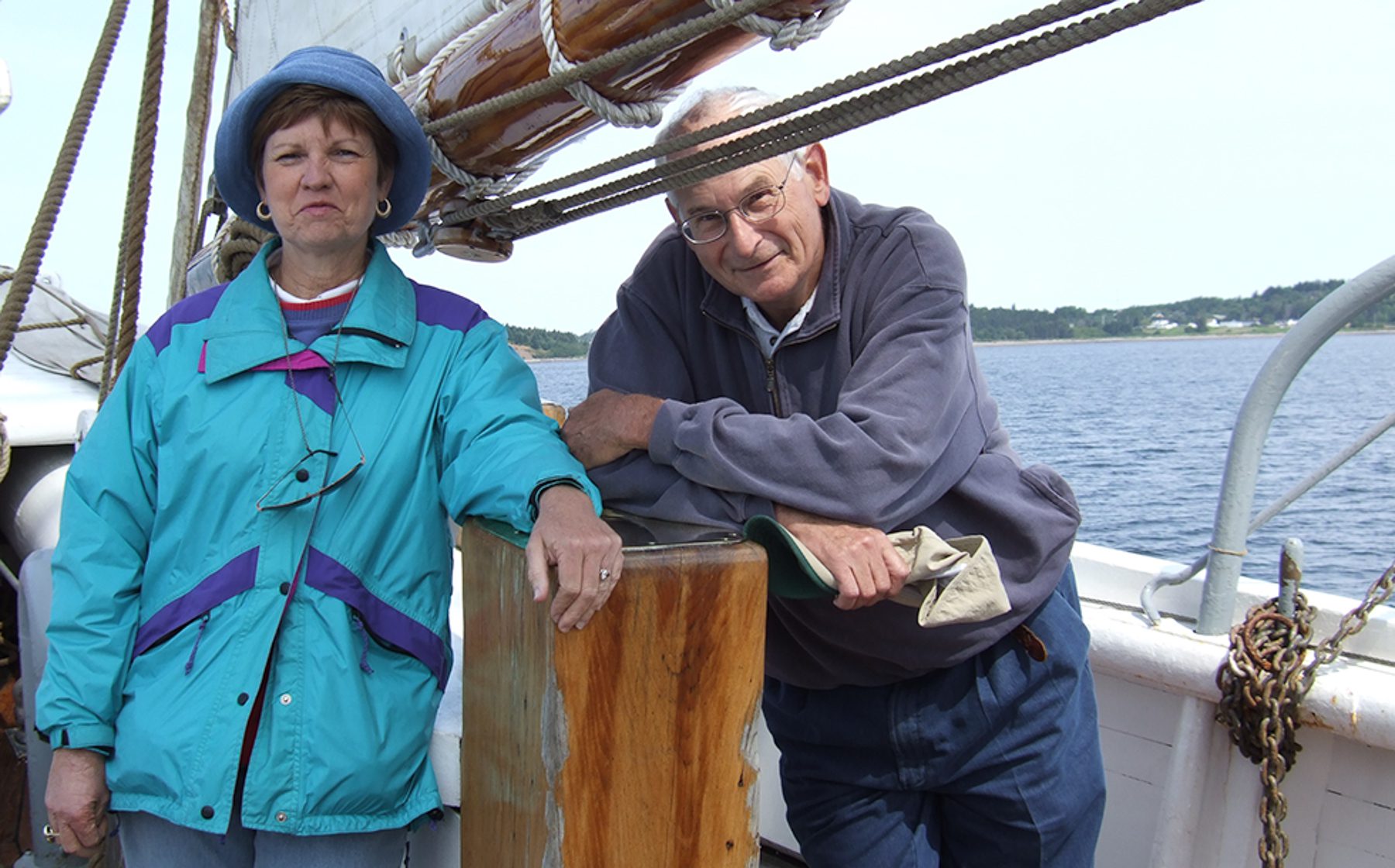
Harold and Meriam
P.S. We hope you enjoy these photographs of some of our early frontier days as much as we have enjoyed being there!
P.P.S. This is the last posting for our sojourn in Southern Wyoming. We are now headed into the Bighorn Mountains for some remote camping and possibly some fly fishing. Looks like the temperatures up there will be in the low 70s during the day and high 30s at night!
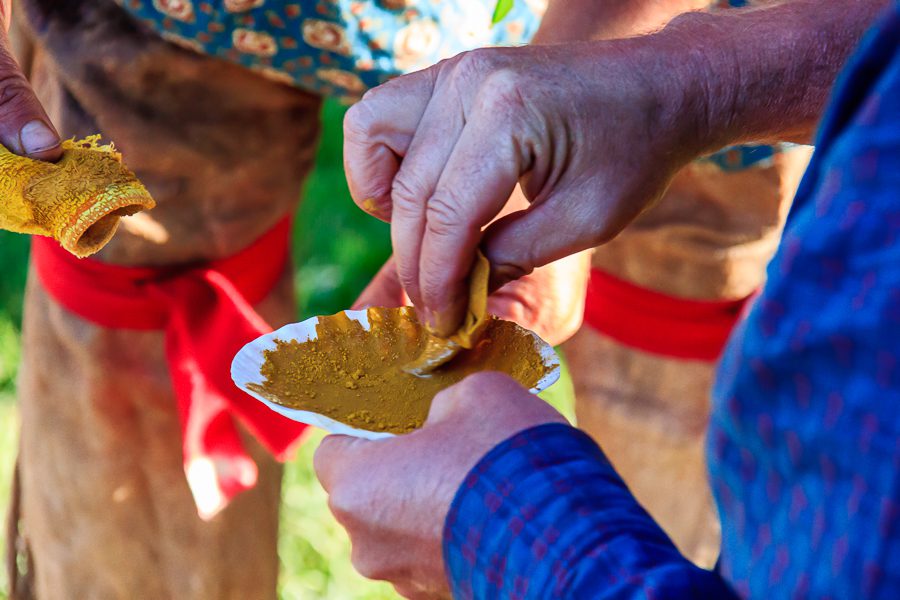
This (and the following photograph) depicts the painting of warriors prior to battle. The dyes are mineral based. Plant based dyes were used for cloth since they do not adhere to the skin very well.

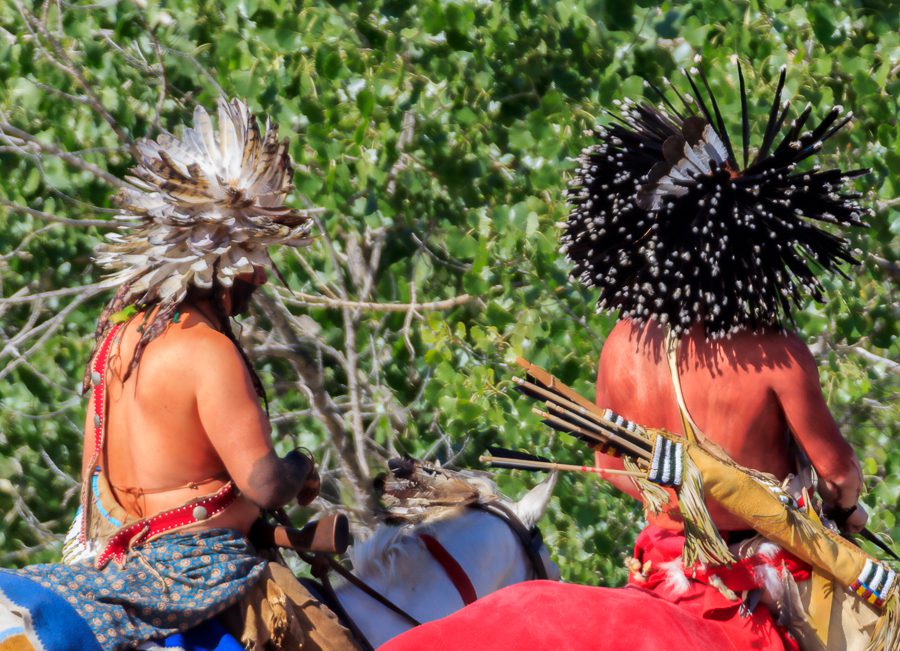


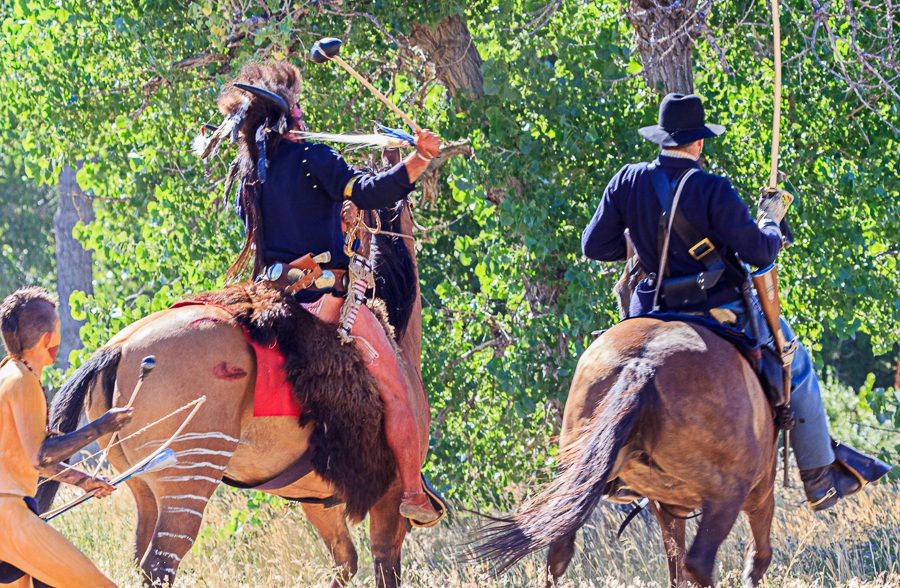
Check out the soldier who is about to get “beaned”!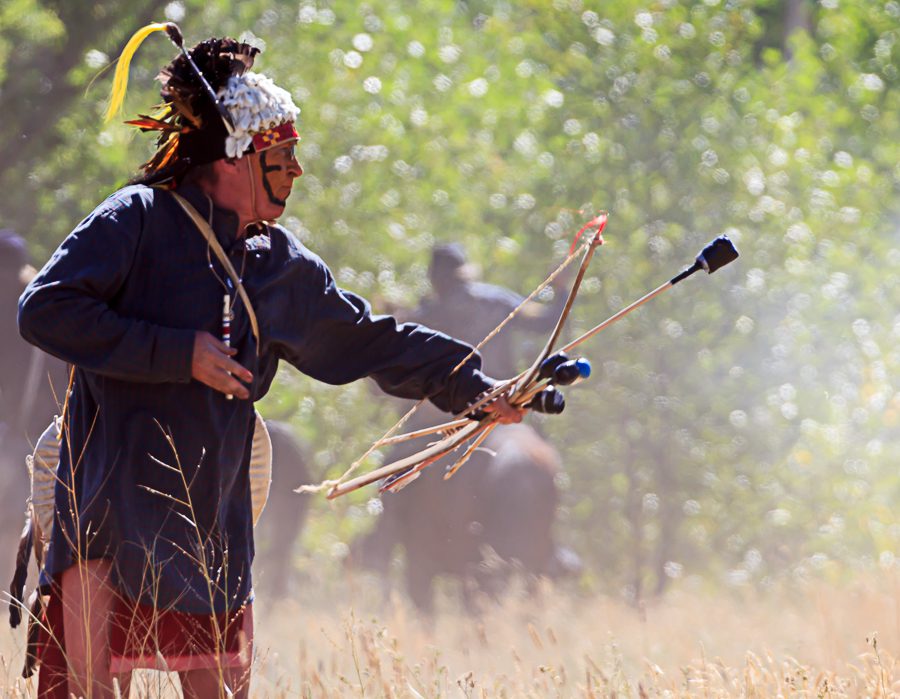
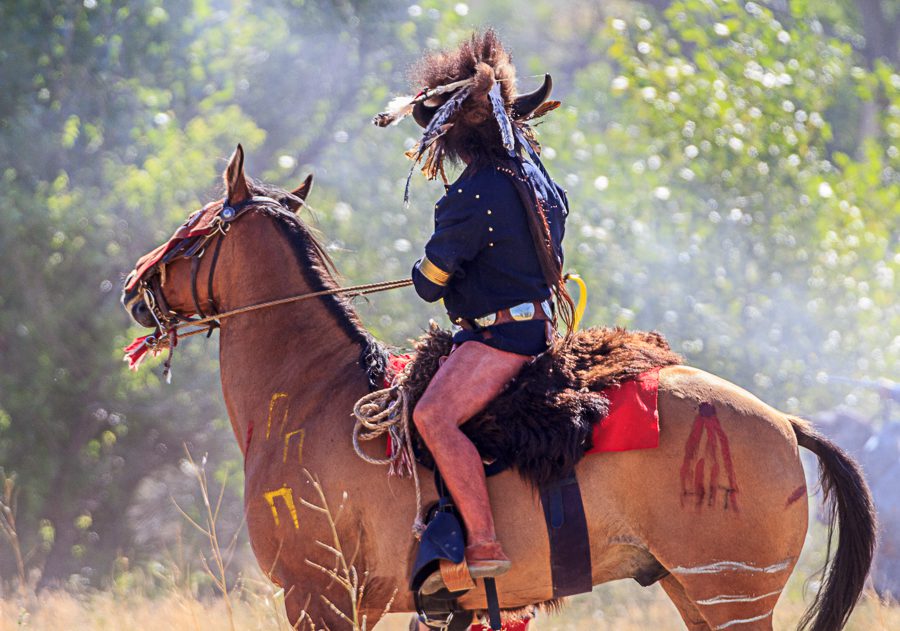
Notice the paintings on the horse. Each symbol has a specific meaning, basically depicting the warrior’s accomplishments.