Some of you may recall a post we made a number of years ago when we visited Ford Museum and Greenfield Village near Detroit, MI. While that visit was most interesting, it relates to this post through the connection we discovered there between Ford and Edison. As you will recall, Greenfield Village houses one of Edison’s original laboratories. Knowing this connection, we just had to visit the Edison and Ford Winter Estate at Fort Myers in Florida.
Thomas Edison purchased the land which would become his winter estate in 1885. He then made a sketch of how he envisioned the property and had an architect turn his ideas into reality. He returned in 1886 with his new bride, Mina Miller Edison. The Edison family enjoyed leisurely stays in Southwest Florida until 1947 when Mrs. Edison deeded the property to the City of Fort Myers.
Since Edison and Henry Ford were big buddies, Edison invited Ford to purchase a home on the Edison Estate. Ford did so in 1917. In fact, we learned that Edison was Ford’s mentor and that Ford worked for Edison before he got into the automobile business. Edison was an early investor in the Ford Motor Company. As the company grew, he and Ford ultimately became sole owners.
While there is some information about Ford in the Edison and Ford Winter Estate, it is clear that Edison was the “prime mover” here. We discovered that Edison’s primary focus at his winter estate was his research into discovering (and developing) a commercially viable domestic source for rubber. Edison was concerned about the domestic availability resources deemed strategic to the United States. At the time (during and immediately after World War I) virtually all rubber was controlled by foreign powers. The dramatic growth of automobiles and electricity increased the need for rubber (tires for cars and coating for wires).
In his search for a domestic source for rubber, he quickly discovered that rubber trees (grown in South America and Southeast Asia) would not grow in the US. Since latex is the primary component for rubber, Edison began the search for alternative sources of latex (virtually all plant material contains some form of latex as it is the material plants use to heal themselves).
In 1927, Edison, Ford, and Harvey Firestone formed the Edison Botanic Research Corporation. The principal laboratory was housed at the Winter Estate and directed by Edison. Edison tested more than 17,000 plant samples, finally discovering a usable source in the goldenrod plant. However, latex from the goldenrod was difficult and expensive to extract and its quality was only marginal.
During this same timeframe, significant advances were being made in developing synthetic rubber and the search of alternate latex sources was terminated by 1936.
Even today, tires and wire coatings are made of 70 percent synthetic rubber and 30 percent natural rubber. Synthetic rubber must contain this percentage of synthetic rubber to be viable.
There is still no domestic source for natural rubber!
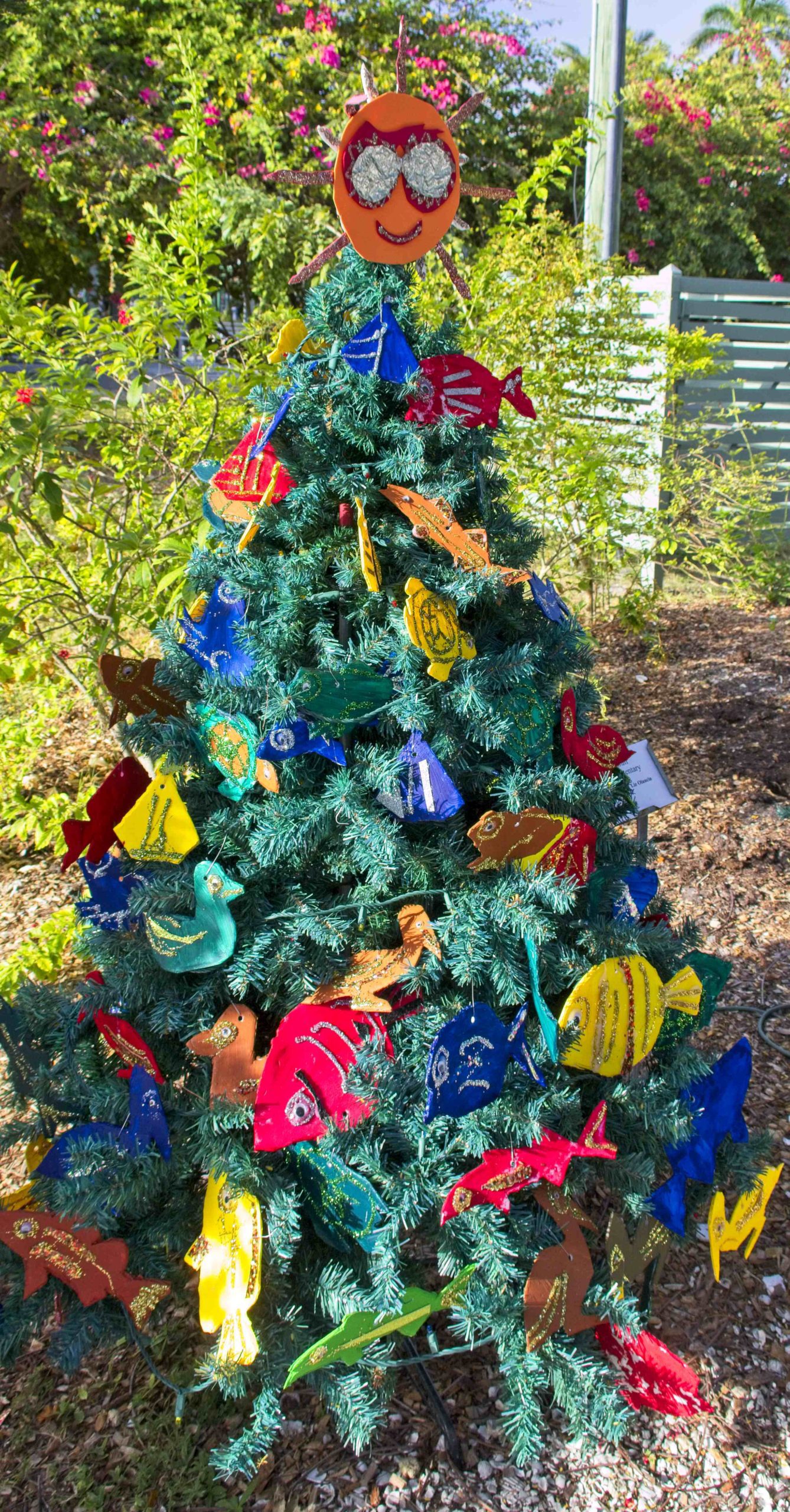
One of several cute Christmas trees at the Edison and Ford Winter Estate decorated by local school children.
 A Banyan tree growing from one central trunk. A statue of Edison stands near a Christmas tree made from Bromeliads.
 Edison’s winter home.

A 75,000 watt light bulb made in 1954 to celebrate the 75th anniversary of the invention of the Edison incandescent lamp. It produces the same light as 2,874 60 watt light bulbs.
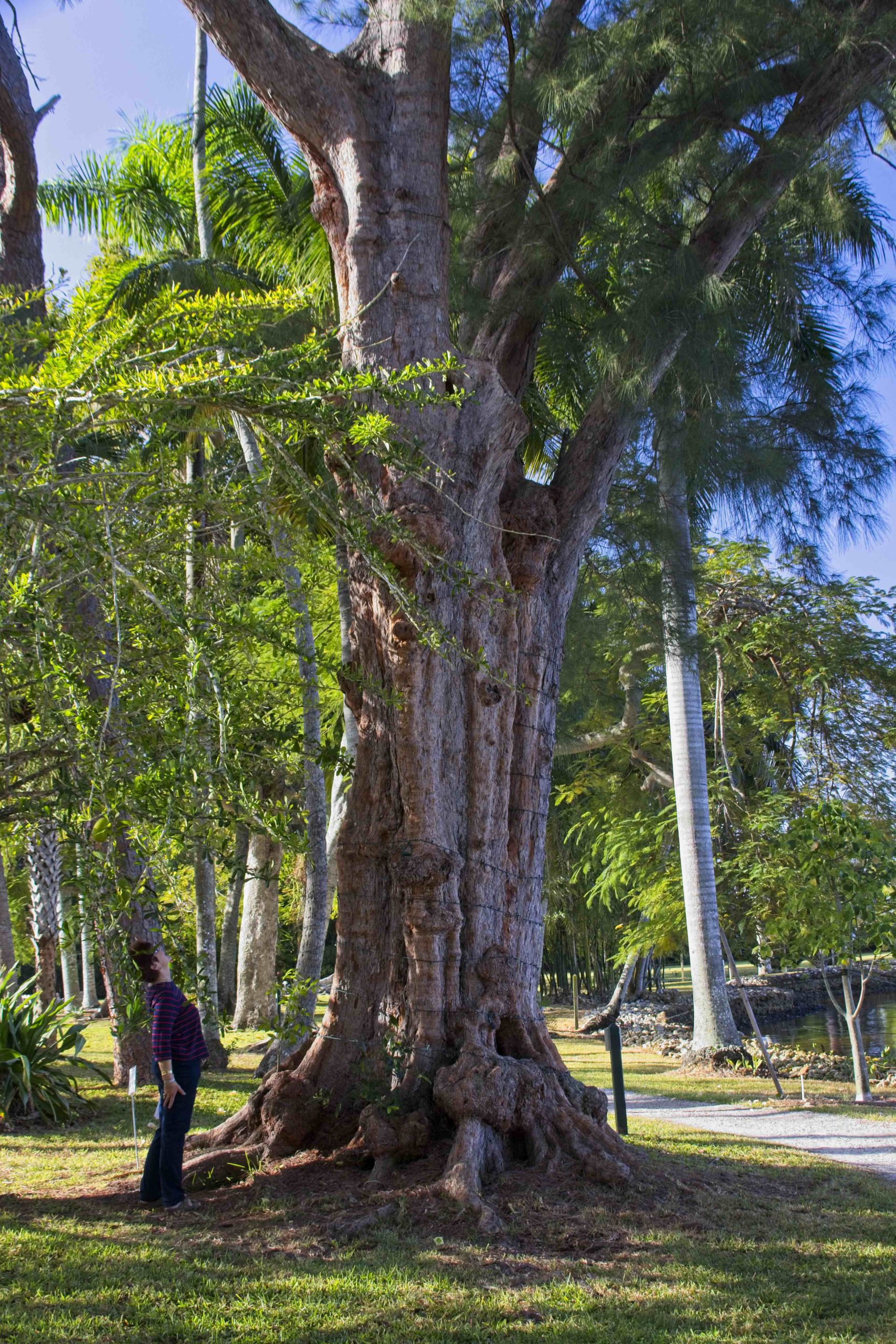
The gardens of The Estate were mostly comprised of trees! It was fascinating to see its variety of large trees.

Ever seen mangos growing?

Check out the root system of this big boy!
 Edison’s botanical research lab. Here is where he tested over 17,000 species of plants.

Another view of the Banyan tree. It was planted in 1927 and is the largest Banyan tree in the continental US.
 This photograph was not taken at The Estate, but at a state park nearby. It is our best photograph so far of the elusive manatee.
Samuel AyerYou guys find the neatest venues to visit and photograph…another great one!
HaroldThanks, Sam. Edison was apparently quite an interesting guy. One of the docents said he was not only very intelligent but also soaked up information like a sponge.
maoWhat an interesting post. I did not know about Edison and Ford. It was also most interesting to see how mangoes grow. Thanks again for your photos.
HaroldThe fact that Edison mentored Ford was very interesting to us.
Terry ioergerSome of our friends from NZ were here for the 100th anniversary of the “T” back in ’08…so I sent a copy of this to Chris.. he enjoyed it very much…great read…
HaroldMost Kool. Thanks for forwarding it and most pleased he enjoyed it.
Laura Pace OmerWhere is the “like” button? lol. These trees and vegetation bring happy memories of Cuba and Carribean. We saw manatees regularly at GTMO but I never thought to take a picture of them!
HaroldLaura, we would love to visit Cuba and the Carribean but don’t think the camper would be able to drive there! We are still searching for some good photographs of manatees!
BOB THOMASHerr Blair: Your research is awesome. Thx!
HaroldThanks, Bob we enjoy “digging things up”. Wait until the next couple of posts!