(Time sequence of actual events)
This post continues with our tracing of the American Revolution as played out in the South. If we relive the days of the Revolution, our next visit was to Fort Watauga at Sycamore Shoals, NC on July 21, 1776, and then return to the fort on September 25, 1780. We then visit the battle of Kings Mountain on October 7, 1780. These three events spelled the beginning of the end for the British, which culminated with the defeat and surrender of General Cromwell at Yorktown, VA on October 19, 1781.
Fort Watauga, July 21, 1776
On this morning, nearly 300 Cherokee warriors attack the fort. While regular or militia forces were not involved in the battle, the Cherokee were supplied with weapons and gun powder by the British, and some of these fort defenders were later to become known as the Overmountain Men.
The attack lasted for over three hours, and random attacks lasted for about two weeks. After devastating defeats, the Cherokee fled further south, leaving the frontier families in peace.


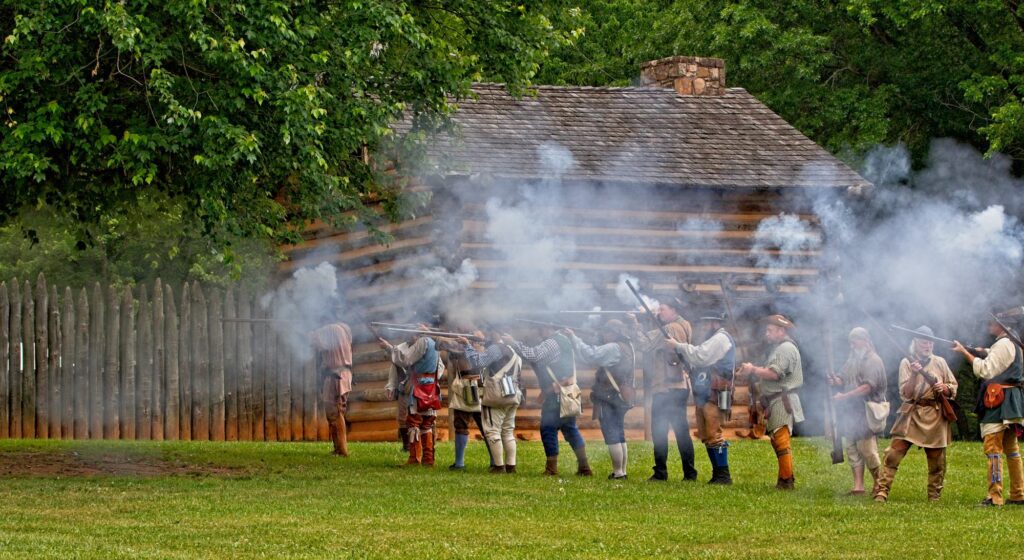
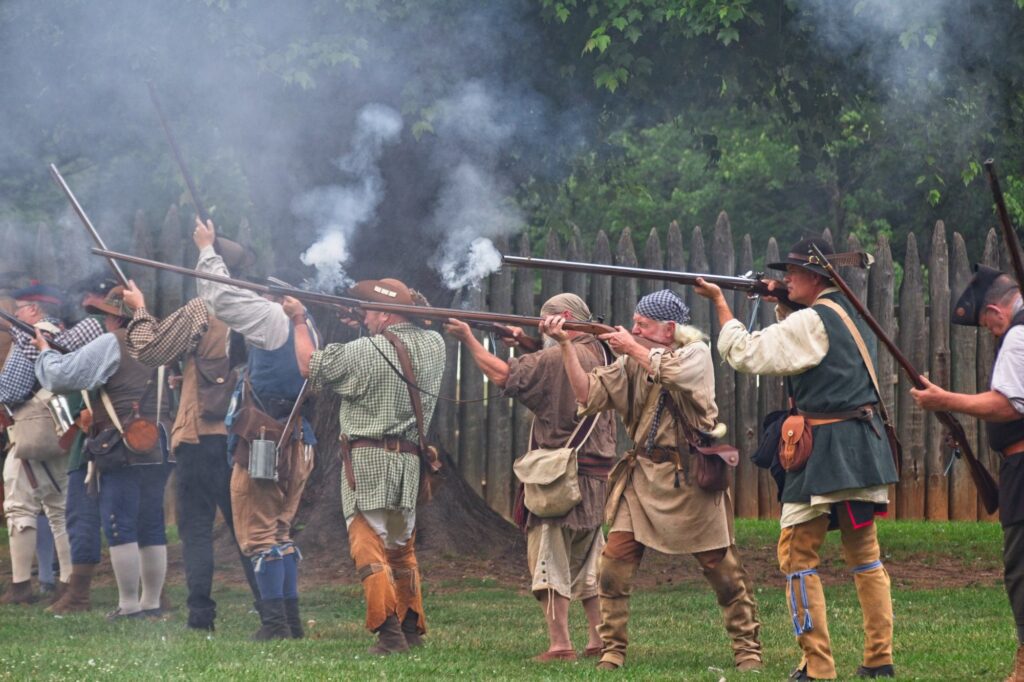


The Muster of Overmountain Men at Sycamore Shoals
On September 25, 1780, the site of Fort Watauga (the actual fort no longer existed) became a mustering of over 1,000 men, determined to protect their homes again. These men were led by Col. William Campbell, Col. Isaac Shelby, and lt. Col. John Sevier. However, the upcoming battle was not against the Cherokee, but against a Loyalist Army led by British Major Patrick Ferguson. Ferguson and his men threatened to cross over the mountains and destroy the settler’s homes. Unwilling to wait for an attack by the British, the frontiersman took the fight to the Loyalists at Kings Mountain.
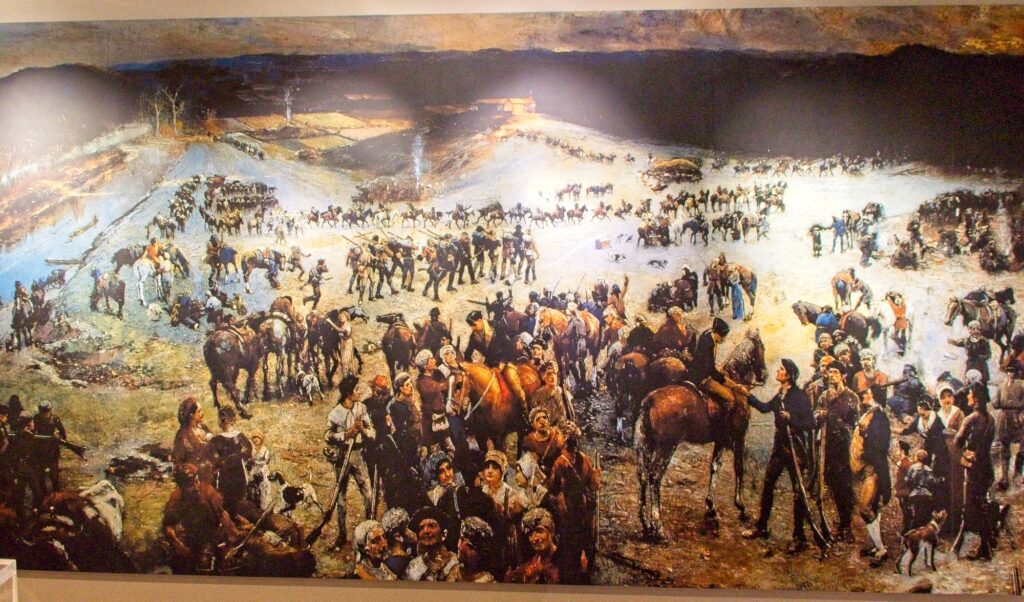


The Battle of Kings Mountain on October 7, 1780
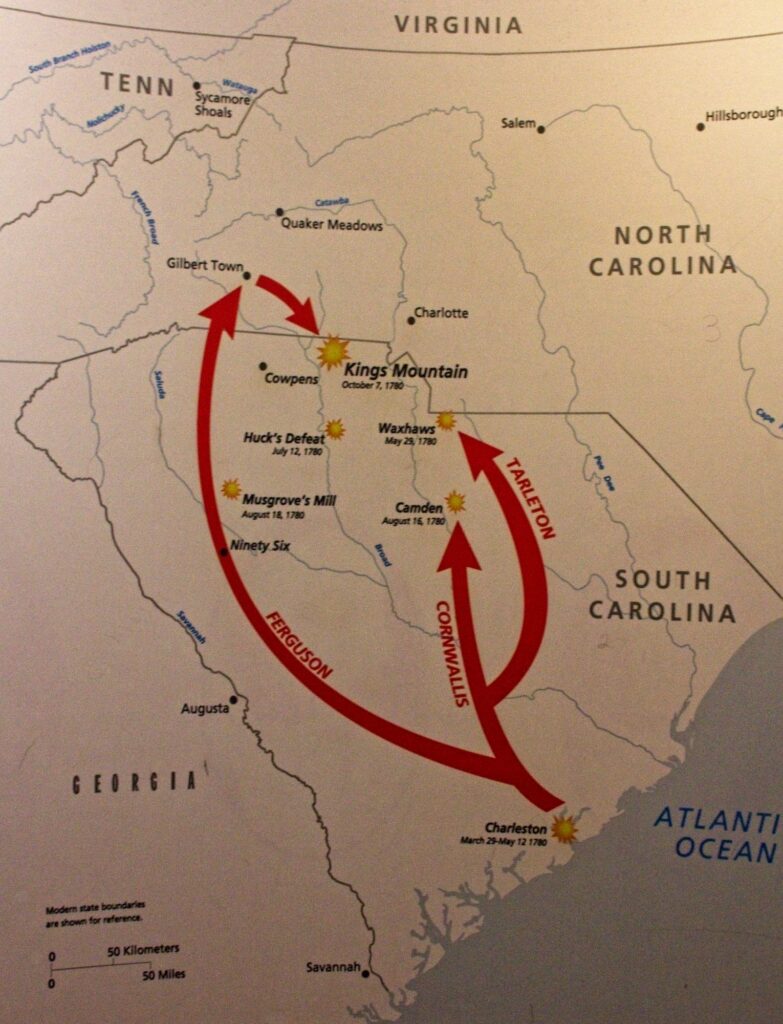
As mentioned previously, by 1780 the northern campaign of the American Revolutionary War had been fought to a stalemate, and England turned its military strategy toward the South. The tactic seemed simple: re-establish the southern royal colonies, march north to join loyalist troops at the Chesapeake Bay, and claim the seaboard.
However, the Battle of Kings Mountain changed this strategy and the course of the war.
General Cornwallis, the British commander of the South, had devised a strategy whereby he would land his troops on the southern seashore of South Carolina. From here, he would quickly set up garrisons, using military force to gain control. He then marched north to subdue North Carolina. He dispatched Col. Ferguson into western North Carolina. Upon arriving, Ferguson sent a message to the “backwater men” (over-mountain patriots) threatening to kill them all if they did not submit. Enraged by the threat, these Overmountain Men decided to attack Ferguson’s forces first.
Ferguson reached Kings Mountain on October 6, 1780, where he decided to await the rebels. He positioned his army of 1,000 loyalist militia and 100 red-coated Provincials on the knoll. The rebels arrived at the base of Kings Mountain at noon on October 7. It was raining, muffling their movements, giving Ferguson little warning of their approach.
The rebels divided their forces into two columns and encircled the steep slopes below Ferguson’s position. At 3 pm, the rebels opened fire on Ferguson’s forces. The knoll where the loyalists had gathered was mostly barren, while the rebels has significant tree and foliage coverage. The patriots, skilled at guerrilla tactics used this cover to decimate the loyalists. Surrounded and silhouetted against the sky, the loyalist were easy targets for the rebel sharpshooters. During the battle, Col. Ferguson was killed. The loyalist then raised the white flag of surrender.
The Overmountain Men accomplished their mission in little over an hour. Ferguson was dead. Lost with him was Cornwallis’ entire left flank. This patriot militia had turned the tide on England’s attempt to conquer the South…and so the nation.


The Transylvania Purchase, an Interesting Side Note:
The Transylvania Purchase occurred on March 14, 1775, when Richard Henderson, a North Carolina land speculator, met with Cherokee representatives at Sycamore Shoals near the present site of Elizabethton, NC. The Cherokees agreed to the Sycamore Shoals Treaty, whereby they transferred to the Transylvania Company, set up by Henderson, a tract of 20 million acres lying north of the Cumberland River, southeast of the Ohio River, and west of the Cumberland Mountains. In exchange, the Cherokees received trade goods valued at approximately ten thousand British pounds.
This purchase effectively divided the Cherokee people into those who wanted peace and those who loved their land.
However, the purchase was not to last. In 1783 the state of North Carolina nullified Henderson’s claim and awarded him a grant of two hundred thousand acres as compensation.

MarkGreat read! Enjoyed the wardrobe pics, too!
HaroldGreat. Glad you enjoyed!
GinnyI’m learning so many things about the Revolutionary War! I don’t think the southern battles are taught in schools. I’d also never given much thought to the difficulty it must have been to acquire clothing in those days in remote areas.
HaroldGinny, we are having fun following the steps of the Southern Campaign. I agree with you, I was never taught anything about this part of our history…makes one wonder what our kids and grandkids are NOT being taught!
mao Thank you for the history lessons on this trip. Arranging to visit at the time of the reenactment brings history to life. And your photos show us this history.
HaroldThanks, MAO. We very much enjoy doing the blog and the enjoyment it seems to bring.